Core Beliefs
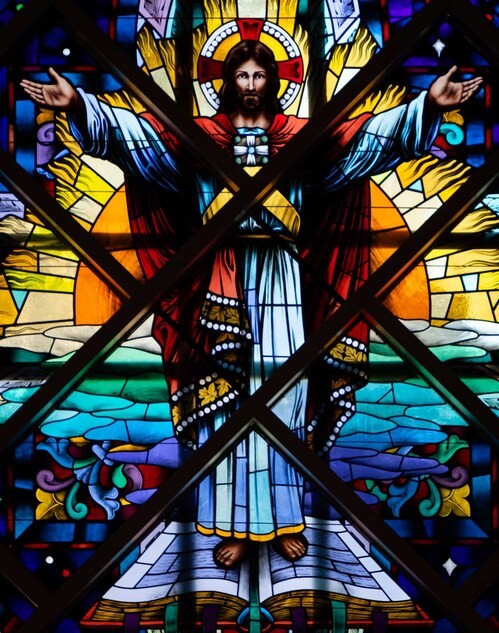
As Episcopalians, we believe in and follow the teachings of Jesus Christ, whose life, death, and resurrection saved the world.
That God loves you. Full stop.
The Episcopal Church has long held that this love leaves no one outside its reach. Women and men, people of every background and orientation, serve at every level of this church's life, as bishops, priests, and deacons. The work of leading and governing this community belongs to all of us, lay and ordained alike, together.
The Episcopal Church has long held that this love leaves no one outside its reach. Women and men, people of every background and orientation, serve at every level of this church's life, as bishops, priests, and deacons. The work of leading and governing this community belongs to all of us, lay and ordained alike, together.
Book of Common Prayer
The Book of Common Prayer is one of the great gifts of our tradition. It is not just a book we pull out on Sunday mornings. It is a treasure chest of prayers, devotions, teaching, and worship that has shaped generations of Christians.
But it is also something even deeper. It is one of the primary signs of our unity. We are not all the same. We come from different backgrounds, carry different stories, and sometimes even see the world in different ways. Yet, when we gather for worship, we are drawn together in Christ through common prayer.
That is part of the beauty of the Prayer Book. It gives us words when we do not have them. It teaches us how to pray. And it keeps our worship deeply rooted in Scripture. In fact, roughly 70% of the Book of Common Prayer comes directly from the Bible. So when we pray these prayers, we are not simply repeating old words. We are praying with the language of Scripture, with the Church across generations, and with one another.
The Bible
“Blessed Lord, who caused all holy Scriptures to be written for our learning: Grant us so to hear them, read, mark, learn, and inwardly digest them” (Book of Common Prayer, p. 236).
The Bible is the foundation of our faith. It tells the story of God’s love, God’s people, and the hope we have in Jesus Christ.
As Episcopalians in the Anglican tradition, we read Scripture with the help of tradition and reason. We listen for God’s Word with the wisdom of the Church, the questions of our own lives, and the minds God has given us.
Scripture fills our worship from beginning to end. The prayers we say, the lessons we hear, the words we sing, and the shape of the liturgy itself are all deeply rooted in the Bible. When we worship, we are not stepping away from Scripture. We are stepping more deeply into it.
The Bible is the foundation of our faith. It tells the story of God’s love, God’s people, and the hope we have in Jesus Christ.
As Episcopalians in the Anglican tradition, we read Scripture with the help of tradition and reason. We listen for God’s Word with the wisdom of the Church, the questions of our own lives, and the minds God has given us.
Scripture fills our worship from beginning to end. The prayers we say, the lessons we hear, the words we sing, and the shape of the liturgy itself are all deeply rooted in the Bible. When we worship, we are not stepping away from Scripture. We are stepping more deeply into it.
Baptismal Covenant
“Do you reaffirm your renunciation of evil and renew your commitment to Jesus Christ?” (Book of Common Prayer, p. 292).
The Baptismal Covenant is one of the clearest summaries of the Christian life in the Episcopal Church.
We use it at baptisms, on Easter, and on other special occasions when we renew our baptismal promises together. It begins with the Apostles’ Creed in a simple question-and-answer form, reminding us of the faith we share.
Then it asks how we will live that faith: by continuing in worship and prayer, resisting evil, proclaiming the Good News, loving our neighbors, and striving for justice and peace.
In the end, the Baptismal Covenant reminds us that faith is not just something we believe. It is something we practice, together, with God’s help.
The Baptismal Covenant is one of the clearest summaries of the Christian life in the Episcopal Church.
We use it at baptisms, on Easter, and on other special occasions when we renew our baptismal promises together. It begins with the Apostles’ Creed in a simple question-and-answer form, reminding us of the faith we share.
Then it asks how we will live that faith: by continuing in worship and prayer, resisting evil, proclaiming the Good News, loving our neighbors, and striving for justice and peace.
In the end, the Baptismal Covenant reminds us that faith is not just something we believe. It is something we practice, together, with God’s help.
The Sacraments
“Sacraments are outward and visible signs of inward and spiritual grace” (Book of Common Prayer, p. 857).
Christ gave the Church two great sacraments: Baptism and the Eucharist.
In Baptism, we are joined to Christ and welcomed into his Body, the Church. In the Eucharist, we are fed and sustained by Christ’s presence as we continue the journey of faith together.
The Episcopal Church also recognizes other sacred moments in the Christian life. These are not separate from God’s grace, but signs of the many ways God meets us along the way. They mark moments of commitment, healing, vocation, forgiveness, and blessing.
In the Book of Common Prayer, these include:
Confirmation, the mature affirmation of our baptismal promises, (pp. 413–419.)
Reconciliation of a Penitent, sometimes called private confession, (pp. 447–452.)
Holy Matrimony, the blessing of Christian marriage, (pp. 422–438.)
Holy Orders, the ordination of deacons, priests, and bishops, (pp. 510–555.)
Unction, the ancient practice of anointing with oil those who are sick or dying, (pp. 453–467.)
Together, these sacramental rites remind us that God’s grace is not limited to one moment in life. Christ meets us at the font, at the altar, in seasons of joy, in moments of need, and all along the road of faith.
Christ gave the Church two great sacraments: Baptism and the Eucharist.
In Baptism, we are joined to Christ and welcomed into his Body, the Church. In the Eucharist, we are fed and sustained by Christ’s presence as we continue the journey of faith together.
The Episcopal Church also recognizes other sacred moments in the Christian life. These are not separate from God’s grace, but signs of the many ways God meets us along the way. They mark moments of commitment, healing, vocation, forgiveness, and blessing.
In the Book of Common Prayer, these include:
Confirmation, the mature affirmation of our baptismal promises, (pp. 413–419.)
Reconciliation of a Penitent, sometimes called private confession, (pp. 447–452.)
Holy Matrimony, the blessing of Christian marriage, (pp. 422–438.)
Holy Orders, the ordination of deacons, priests, and bishops, (pp. 510–555.)
Unction, the ancient practice of anointing with oil those who are sick or dying, (pp. 453–467.)
Together, these sacramental rites remind us that God’s grace is not limited to one moment in life. Christ meets us at the font, at the altar, in seasons of joy, in moments of need, and all along the road of faith.
The Creeds
The Creeds are statements of our basic beliefs about God (Book of Common Prayer, p. 851).
In the two foundational statements of faith, the Apostles' Creed used at Baptism and the Nicene Creed used at the Eucharist, we join Christians throughout the ages in affirming our faith in the one God who created us, redeemed us, and sanctifies us.
In the two foundational statements of faith, the Apostles' Creed used at Baptism and the Nicene Creed used at the Eucharist, we join Christians throughout the ages in affirming our faith in the one God who created us, redeemed us, and sanctifies us.